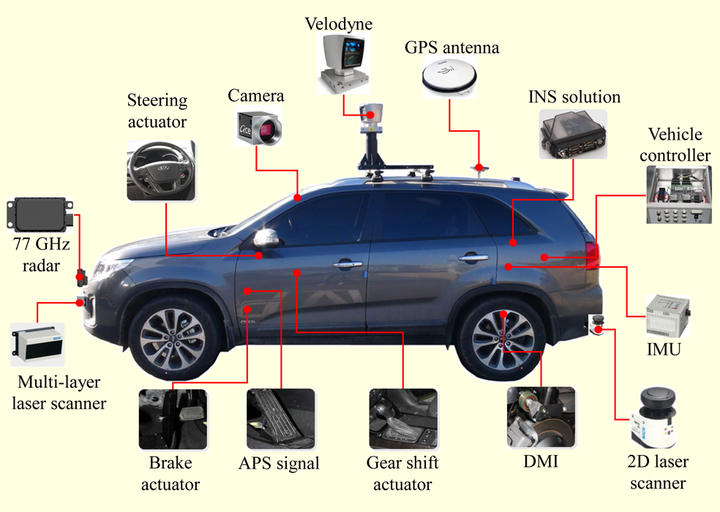
Controller
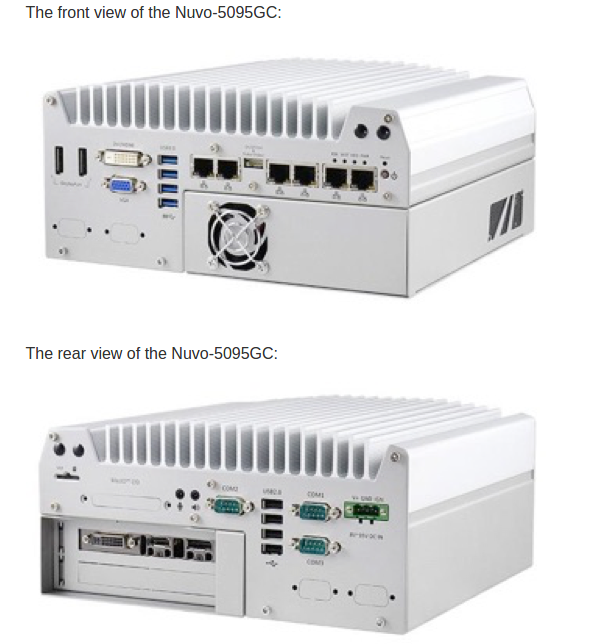
In the early algorithm pre-research stage, it is recommended to use an Industrial PC (IPC) as the most direct controller solution. This is because industrial PCs are more stable and reliable compared to embedded devices, and the community support and accompanying software are also more abundant. Baidu's open-source Apollo recommends an industrial PC with a GPU, model Nuvo-5095GC, as shown below.
When algorithm research has reached a relatively mature stage, embedded systems can be utilized as controllers, such as the zFAS jointly developed by Audi and TTTech, which has been applied to the latest Audi A8 production vehicles.
2. CAN card
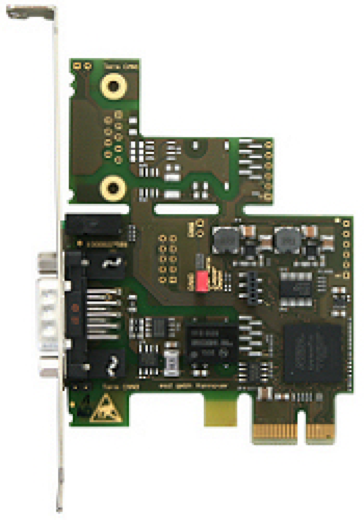
The interaction between the industrial computer and the automobile chassis must be conducted through a specialized language - CAN. To obtain information such as the current vehicle speed and the steering wheel angle from the chassis, it is necessary to parse the data sent by the chassis to the CAN bus. After calculating the steering wheel angle and desired vehicle speed through sensor information, the industrial computer also needs to transcode the message into a signal that the chassis can recognize through the CAN card, and then the chassis responds accordingly. The CAN card can be directly installed in the industrial computer and then connected to the CAN bus through an external interface. The CAN card used by Apollo is the ESD CAN-PCIe/402 model, as shown below.
3. Global Positioning System (GPS) + Inertial Measurement Unit (IMU)
When humans drive from point A to point B, they need to know the map from point A to point B, as well as their current location, so as to determine whether to turn right or go straight at the next intersection. Similarly, the autonomous driving system relies on GPS+IMU to know where it is (latitude and longitude) and in which direction it is driving (heading). Of course, IMU can also provide richer information such as yaw rate and angular acceleration, which are helpful for the positioning and decision-making control of autonomous vehicles. The GPS model of Apollo is NovAtel GPS-703-GGG-HV, and the IMU model is NovAtel SPAN-IGM-A1.
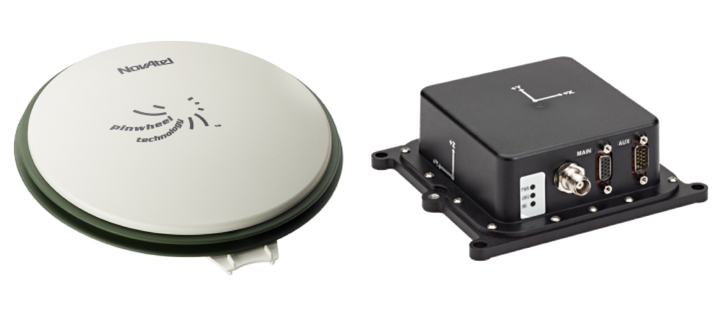
4. Perception sensor
There are many types of perception sensors, including visual sensors, laser sensors, radar sensors, and so on.
A visual sensor is essentially a camera, which can be categorized into monocular vision and binocular (stereo) vision. Well-known providers of visual sensors include Mobileye from Israel, PointGrey from Canada, and Pike from Germany. Laser sensors are classified into single-line, multi-line, and up to 64-line models. For every additional line, the cost increases by 10,000 RMB, and naturally, the corresponding detection performance also improves.
Well-known laser sensor providers include Velodyne and Quanergy from the United States, Ibeo from Germany, and so on. Domestically, there are Suteng Juchuang and Hesai Technology. Radar sensors are the strength of Tier 1 suppliers in the automotive industry, as they have been widely used in cars. Well-known suppliers include Bosch, Delphi, Denso, and so on.
 Shortage procurement
 Excessive mitigation
 Cost saving
 Inventory management project
 Quality inspection